The Design Office
Work-done tracking
Work delivered against the stage, and against the fee. The gap between the two is the number a practice most needs and least often has.
- Partner
- Project architect
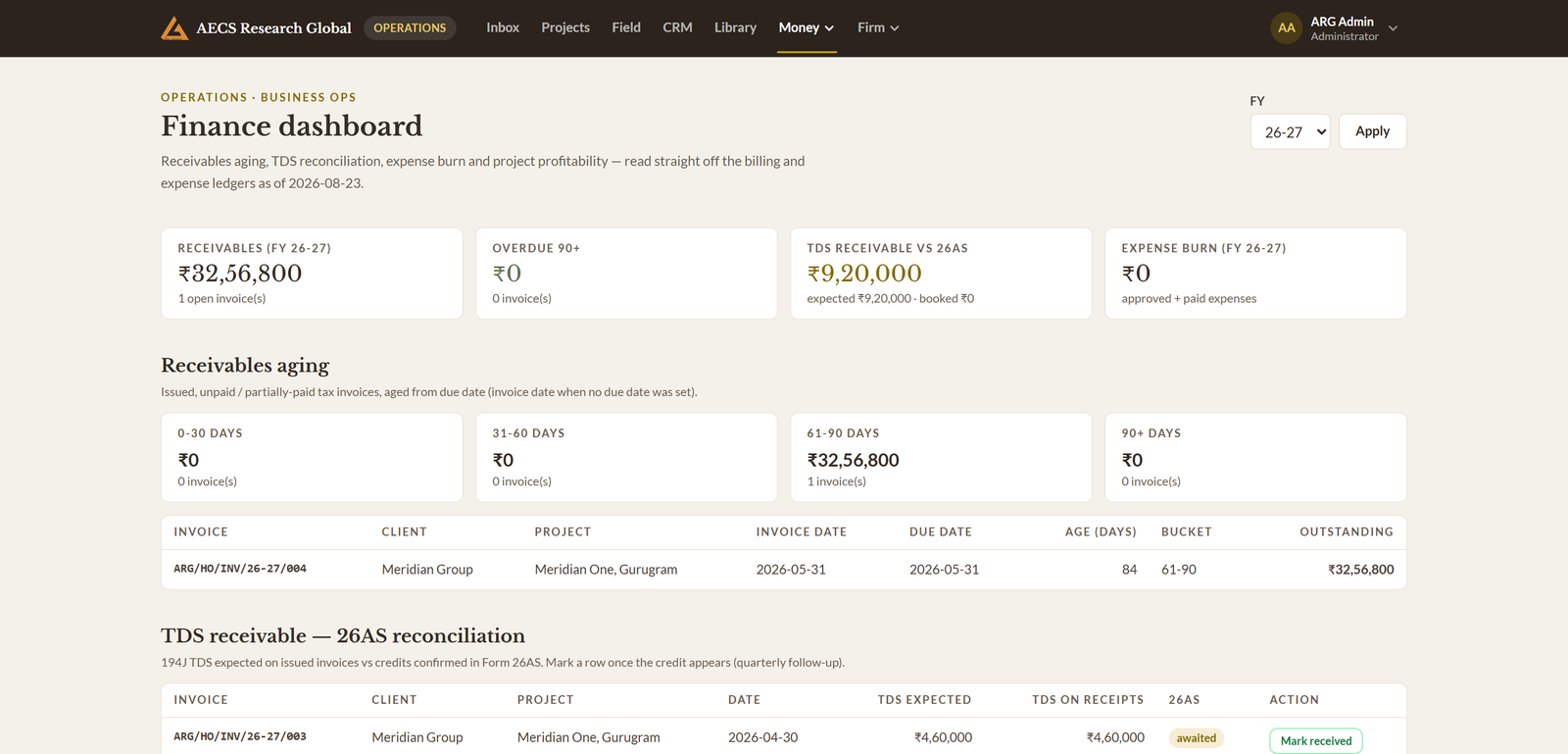
In a practice. Two projects can carry the same fee and the same programme, and one of them quietly loses money because the practice delivered a stage and a half beyond what has been invoiced. Work-done tracking makes that visible monthly rather than at year end.
What it measures
Deliverables issued versus deliverables due
Progress read from the register — sheets issued at the required suitability — not from a status field somebody maintains.
Fee earned versus fee invoiced
Stage completion converted to fee entitlement and set against what has actually been raised. Unbilled entitlement is surfaced as a nudge, with its age.
Scope creep, named
Work delivered outside the appointed deliverable catalogue is listed as additional service — the raw material of a variation conversation you can actually have.
Revision churn as a cost signal
Sheets re-issued three times or more, grouped by cause — client change, consultant coordination or internal rework. The most honest efficiency measure a practice can keep.
What it produces
- Monthly fee position per project: earned, invoiced, received, outstanding.
- Unbilled schedule with the stage evidence ready to attach.
- Additional-services list for the next fee discussion.